
Machine vision for quality inspection
Product error detection system on high-speed production lines — one of the two technologies forecast to grow fastest in Vietnam.
Deep Tech · Sector hub
HCM VIF aims to invest in teams mastering core technologies in automation — machine vision, control and collaborative robots — and is willing to co-invest with other funds to share limits for those requiring chain capital.
Why now?
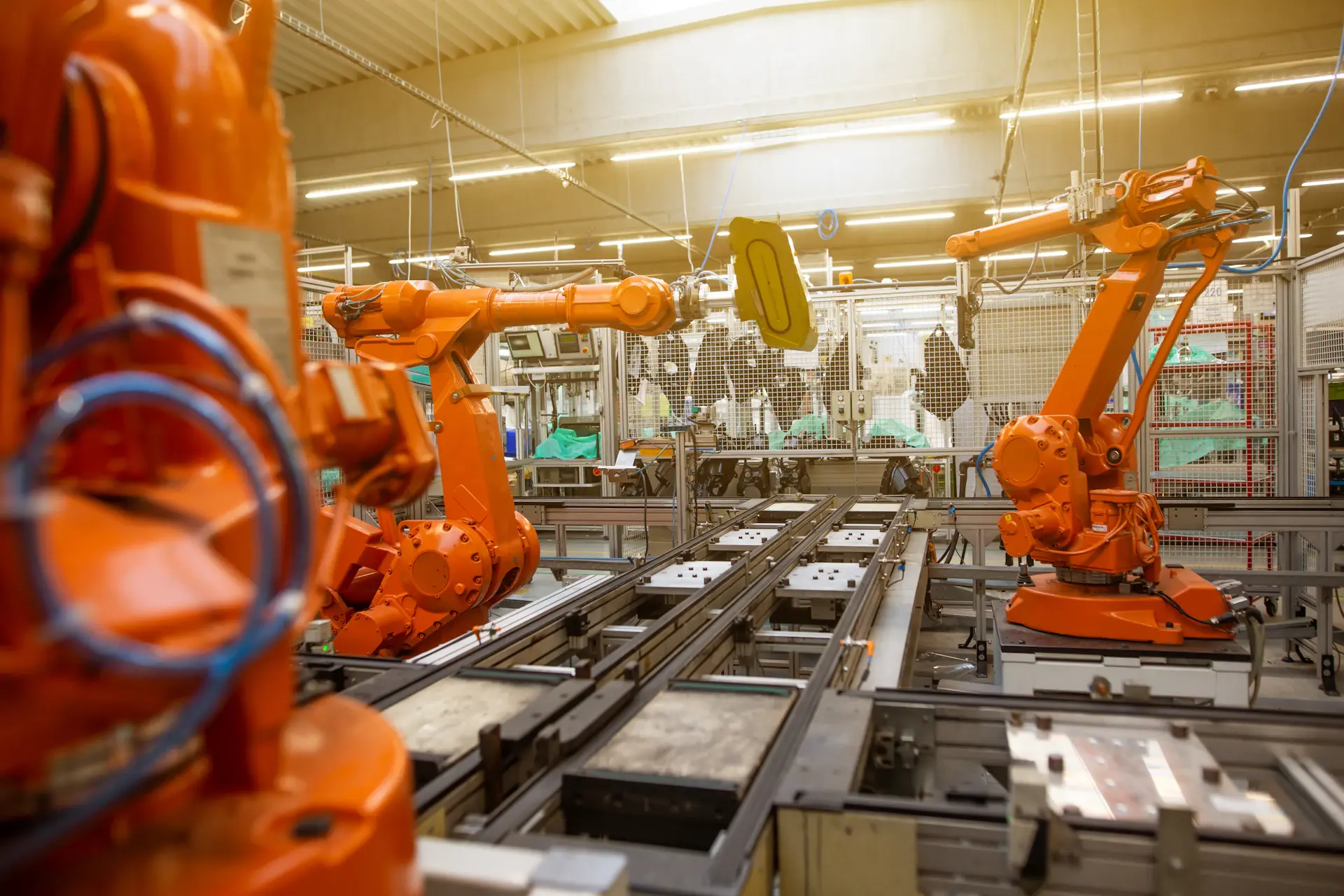
Rising labour costs and increasingly strict quality requirements from export supply chains are pushing Vietnamese factories into a choice that cannot be delayed: automate or lose orders. The density of robots in factories in Vietnam has increased nearly six times in just five years.
With more than 9,500 newly deployed robots in 2023, Vietnam has been named among the largest robot markets in the world. However, most of the value still belongs to foreign suppliers: Vietnam has not been proactive in core technologies such as sensors, control chips and coordination software.
Importing a robot arm is easy. Mastering the machine vision and coordination software behind it is where long-term value is created for the City.
This is the time when HCM VIF wants to accompany: when the market demand is clear and the source of mechatronics engineers is being trained strongly, but domestic teams still lack capital to invest in production lines and standardize products. product.
Gần 6 lần
Increase in robot density in factories in Vietnam over 5 years
Source: Government Newspaper – Industrial robots create a turning point for smart production in Vietnam
9.500+
New industrial robots will be deployed in 2023, bringing Vietnam into the world's largest robot market group
Source: Government Newspaper, citing data from the International Federation of Robotics (IFR)
50.000
Mechanical - electronic, automation and AI engineers training target until 2030
Source: Government Newspaper – Human resource orientation for smart production
Ho Chi Minh City Chance
The mechatronics, control and automation departments at the Ho Chi Minh City technical school provide both the underlying technology and the engineering team for startups in the industry.
The network of precision mechanical factories and businesses around the City are both the first customers and mechanical processing partners for products.
The High-Tech Park and shared manufacturing workshops help the team build prototypes and test lines without investing in a separate factory.
The City's production technology upgrade support programmes create a bridge for startups to approach factories in need of conversion.
HCM VIF what to look for in the industry
The team has its own control software, machine vision algorithms or mechatronic design — not just integrating imported equipment.
There is at least one line in operation with recorded productivity data, error rates and machine downtime.
Standardized solutions can be rolled out to the next customer at a reduced cost of customization, instead of each project being a redo.
Clear plan for using capital for production lines and inventory, ready to co-invest with other funds to share limits.
The central problem
Product error detection system on high-speed production lines — one of the two technologies forecast to grow fastest in Vietnam.
Cobot solution is reasonable cost, easy to programme, suitable for businesses that do not have enough scale to invest in full automation lines.
Dispatching systems, equipment monitoring and predictive maintenance management — the software layer that determines the efficiency of the entire line.
Industrial sensors and controllers are designed by domestic teams, reducing dependence on imported core technology.
Autonomous vehicles, sorting systems and warehouse automation solutions serve rapidly expanding supply chains around the City.
The above list is the direction the Fund is interested in, not a limit. If your business pursues a disruptive new technology that falls outside of the above categories, we'd love to hear.
List of priority fields according to the Fund establishment project — where the Fund actively searches and receives investment applications.
Submit your application online for the Fund to consider according to the investment criteria of the automation & robotics sector, or learn about the Fund's investment strategy in advance.